Virat Kohli and Rohit Sharma Rested in Vijay Hazare Trophy Third Round as Domestic Cricket Takes Centre Stage – 2025
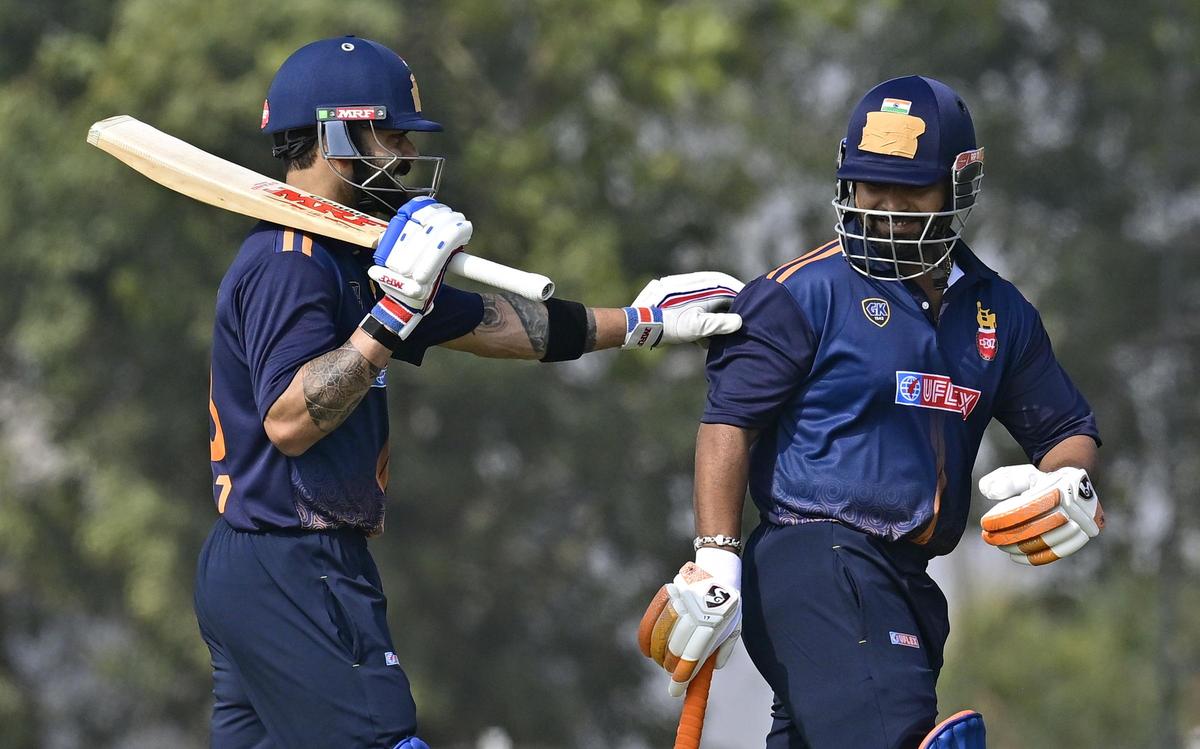
The Vijay Hazare Trophy 2025–26 rolled into its crucial third round with packed venues and competitive fixtures across the country, but fans were left surprised when two of India’s biggest cricketing icons — Virat Kohli and Rohit Sharma — were missing from their respective team sheets. Delhi’s Kohli and Mumbai skipper Rohit were both rested for the round, a move that has sparked discussion across the domestic cricket fraternity, even as the tournament continues to deliver high-quality action.
The decision to rest Kohli and Rohit was not linked to injury or form concerns. Instead, it was part of a carefully structured workload management plan devised by the BCCI in coordination with state associations. Both batters had already featured in the opening two rounds of the competition and were cleared to skip the third match in order to balance domestic exposure with international commitments scheduled in the new year.
Kohli had made a strong return to List A cricket for Delhi after a prolonged absence from the domestic circuit. He began the tournament with a classy century against Andhra Pradesh, anchoring Delhi’s innings with authority and reminding onlookers of his enduring hunger for runs. In the following match against Gujarat, he chipped in with a fluent half-century, playing the role of the senior professional who stabilised the innings under pressure.
Rohit Sharma’s cameo appearances for Mumbai were even more explosive. In his opening outing, the India captain smashed a blistering 155, peppering the boundary with trademark pulls and lofted drives that lit up the stadium. His innings was a rare spectacle in domestic one-day cricket and provided a morale boost for Mumbai’s campaign, which had started with mixed results in the group stage.
With both players sitting out the third round, Delhi and Mumbai had to reshuffle their line-ups, offering valuable opportunities to fringe players and emerging talent. Mumbai still managed to secure a convincing victory over Chhattisgarh, riding on disciplined bowling and a composed chase, while Delhi entered their clash against Saurashtra without their talisman but with renewed emphasis on collective performance.
The Vijay Hazare Trophy has always been a proving ground for India’s next generation, and this round underlined that tradition. Across the country, young batters and fast bowlers seized their moment. Bihar’s Vaibhav Suryavanshi turned heads with a fearless stroke-filled knock, while teams like Karnataka, Tamil Nadu, and Kerala continued their steady climb in the standings through balanced all-round performances.
One of the standout efforts of the round came from wicketkeeper-batter Dhruv Jurel, who produced a marathon hundred to guide his side out of trouble. His innings did not just earn match points but also strengthened his case as a future ODI contender, especially with India preparing for a packed international calendar in 2026.
From the selectors’ perspective, the absence of Kohli and Rohit was a reminder that domestic tournaments are no longer solely about star power. Instead, they are platforms for experimentation, rotation, and long-term squad building. With India set to host New Zealand in a three-match ODI series starting in mid-January, protecting senior players from fatigue has become a strategic priority.
There is, however, still a chance that Kohli may return for a later league match if his schedule permits. Delhi’s fixture against Railways in early January is being closely monitored, with team officials keen to use his experience during the decisive phase of the group stage. Rohit, on the other hand, is expected to conclude his domestic stint for this season, having fulfilled his two-match commitment.
As the tournament moves deeper into the league phase, the focus is now firmly on qualification scenarios and net run rate calculations. With 38 teams spread across Elite and Plate groups, the margin for error is minimal, and every victory could be the difference between knockout qualification and early elimination.
For the fans, the temporary absence of Kohli and Rohit in the third round may have reduced the star appeal, but it has also shifted attention back to the depth of India’s domestic cricket ecosystem. The Vijay Hazare Trophy continues to thrive as a competitive arena where reputations are built, futures are shaped, and the next wave of Indian cricketing excellence steadily takes form.
Follow BiGG Sports News for sports stories
About the Author