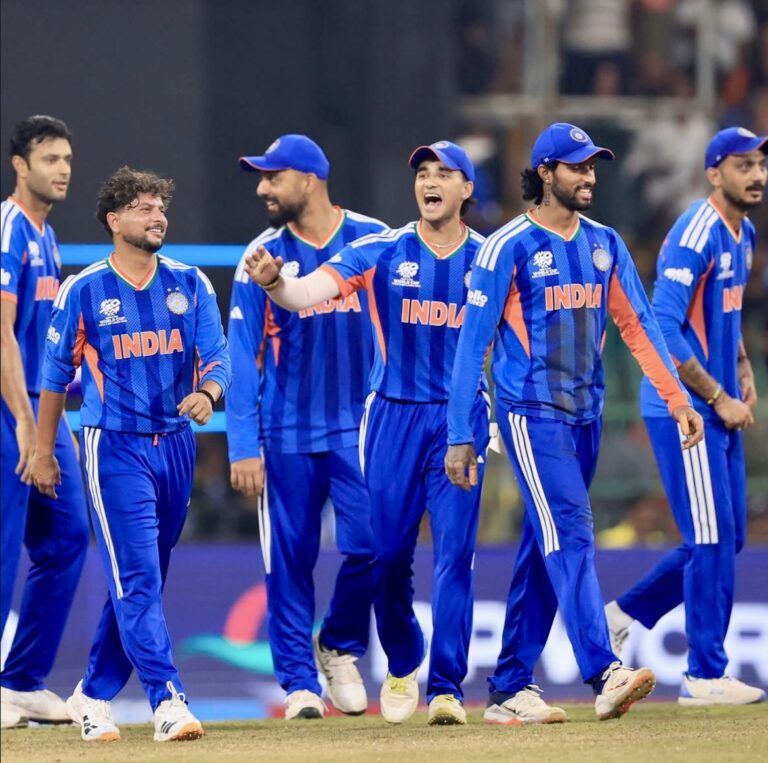
South Africa Hand India Crushing 76-Run Defeat in T20 World Cup Super 8 Clash
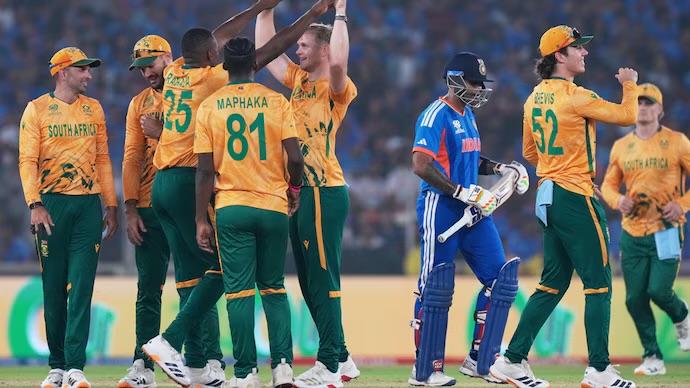
In a dramatic Super 8 encounter at the ICC Men’s T20 World Cup 2026, the India national cricket team suffered a heavy 76-run defeat against a clinical South Africa national cricket team, bringing an abrupt end to India’s impressive unbeaten streak in global T20 competitions.
South Africa Post Commanding Total
Opting to bat first, South Africa delivered a batting masterclass under pressure. Their top order laid a solid platform during the powerplay, capitalising on width and anything marginally short from the Indian seamers. The Proteas maintained a run rate well above eight per over through the middle phase, rotating strike efficiently while punishing loose deliveries.
A late surge in the final five overs proved decisive. India’s death bowling lacked its usual precision, with yorkers missing their mark and slower deliveries sitting up to be dispatched. South Africa eventually posted a daunting total beyond the 190-run mark, setting India a steep target in a high-stakes knockout-stage fixture.
India’s Chase Falters Early
India’s reply never truly gathered momentum. Early wickets derailed the chase, as South Africa’s pace attack exploited seam movement and hard lengths. The Indian top order struggled to find timing, with boundaries drying up during the crucial powerplay overs.
Captain Suryakumar Yadav attempted to stabilise the innings with a counter-attacking approach. However, consistent wickets at the other end increased scoreboard pressure. South Africa’s bowlers executed their plans with discipline, mixing short balls with well-disguised slower deliveries to prevent India from building partnerships.
By the halfway mark of the innings, the required run rate had escalated beyond control. The middle order failed to accelerate, and the lower order was left with an improbable equation. India were eventually bundled out well short of the target, losing by a massive 76-run margin — one of their heaviest defeats in T20 World Cup history.
Tactical Questions Emerge
The defeat has sparked debate over India’s team combination and bowling strategy. The decision to rely heavily on matchup-based selections backfired as South Africa’s batters adapted smartly. The absence of early breakthroughs allowed the Proteas to dictate tempo, while India’s field placements during the death overs came under scrutiny.
India’s bowling economy in overs 16–20 proved particularly costly, conceding momentum at a stage where containment was critical. In contrast, South Africa showcased clarity in execution, sticking to hard lengths and disciplined lines during the chase.
Super 8 Implications
The loss significantly impacts India’s qualification prospects in the Super 8 stage. Net run rate now becomes a critical factor, and the team will need commanding victories in upcoming fixtures to keep semifinal hopes alive.
Speaking after the match, Suryakumar Yadav remained optimistic, stating that setbacks are part of tournament cricket and backing the squad to respond strongly in the next game. “We’ve played quality cricket leading up to this. One bad day doesn’t define us,” he remarked in the post-match presentation.
South Africa’s Statement Win
For South Africa, this was more than just two points — it was a statement performance. Their balanced attack, aggressive batting intent, and sharp fielding underline their credentials as genuine title contenders in this edition of the tournament.
The Proteas’ ability to accelerate late and defend under pressure highlights a maturity often questioned in past ICC events. If they maintain this level of execution, they could be serious challengers for the trophy.
India will now regroup quickly as the tournament enters its decisive phase. With high expectations from fans and a packed international calendar ahead, the focus shifts to how swiftly the Men in Blue can recalibrate and respond.
For now, South Africa walk away with momentum, confidence, and a dominant victory that reshapes the Super 8 narrative.
Follow BiGG Sports News for more sports stories
About the Author