India Shine Bright at World Boxing Cup Finals: Pawan Bartwal Leads a Dominant Medal Surge – 2025
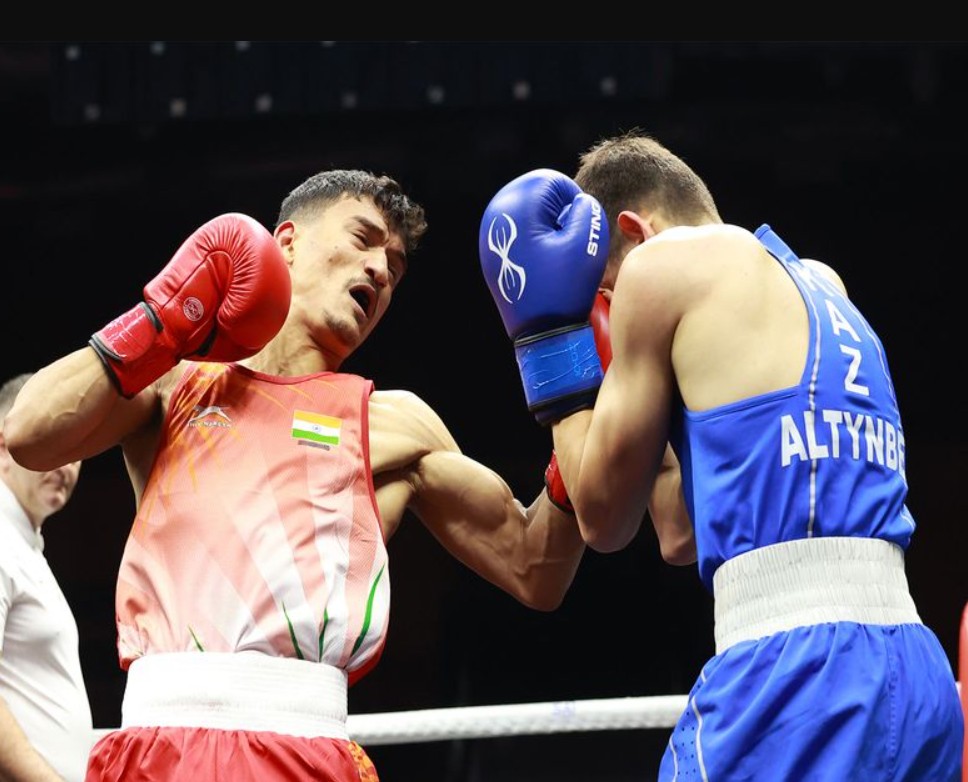
India delivered one of its strongest international boxing performances of recent years at the World Boxing Cup Finals, recording a flawless medal run powered by the stunning emergence of young sensation Pawan Bartwal. The tournament, held in Astana, Kazakhstan, showcased a refreshed and fearless Indian boxing unit that walked away with a perfect medal tally and renewed global respect.
The highlight of India’s campaign came in the men’s 55kg category, where Pawan Bartwal produced the biggest upset of the event. Facing Kazakh favourite Altynbek Nursultan, known for his explosive counter-punching, Bartwal displayed maturity far beyond his experience. He controlled distance, defended smartly, and executed sharp left hooks to earn a unanimous 5–0 decision. The victory stunned the home crowd and firmly announced his arrival on the international stage.
For Indian boxing, Pawan Bartwal performance represents both a breakthrough and a promise. His composure under pressure, tactical clarity and relentless fitness were the hallmarks of modern, data-driven coaching—a direction India has increasingly leaned towards under its revamped high-performance programme. Coaches credited his win to targeted sparring sessions, strategic video analysis and focused strength conditioning that sharpened his movement and defensive discipline.
India’s domination, however, wasn’t limited to Pawan Bartwal alone. The women’s contingent, led by a newly structured squad of young contenders, produced five medals from seven weight categories. Names like Sunita Karki (50kg), Asha Tiwari (60kg) and Neha Jat (75kg) showcased India’s rising depth in women’s boxing. Their performances reflect the success of grassroots investments made over the past three years, particularly in states like Haryana, Manipur and Assam where structured youth programmes have flourished.
Team India’s overall medal haul—across men’s and women’s divisions—signals a pivotal moment in the sport’s progress. The Boxing Federation of India (BFI) termed it a “historic performance,” adding that the results reflected discipline, planning and patience. The federation credited India’s revamped domestic circuit, where exposure tournaments and simulation camps have played a significant role in preparing athletes for elite international bouts.
One of the key factors behind India’s success was the new analytical approach adopted at the national camp. Each boxer competed with an individually tailored match plan, based on opponent profiling and statistical breakdowns of punch patterns and ring movement. This method helped Indian athletes stay a step ahead tactically, allowing them to maintain control in high-pressure exchanges. The consistency of this preparation was evident in India’s near-perfect win-loss record throughout the tournament.
Off the ring, the Indian squad also made headlines for its discipline and unity. The women’s team, in particular, received praise from international observers for their precise technique and fearless approach, often outmanoeuvring opponents from traditionally stronger boxing nations such as Kazakhstan, Uzbekistan and Turkey. Their medal sweep positions India firmly among the rising forces expected to shape the global boxing landscape in the next Olympic cycle.
The success at the World Boxing Cup Finals comes at a time when Indian boxing is undergoing leadership and structural transitions. While elite stars like Amit Panghal and Nikhat Zareen continue to inspire, the emergence of fresh names like Pawan Bartwal ensures India’s momentum does not rely solely on a handful of established athletes. This balanced mix of experience and young firepower is likely to define India’s approach to upcoming international assignments, including the Asian Championships and Olympic qualifiers.
As the team returns home with high morale, the challenge ahead will be maintaining consistency and managing pressure. But if the World Boxing Cup Finals are a sign of what lies ahead, Indian boxing is entering a new, confident era—one defined by aggressive ambition, scientific preparation and the rise of athletes who fear no opponent on the world stage.
Follow BiGG Sports News for sports stories
About the Author